

The conversation about AI and coding work is full of highs. These models are incredible! I’m so productive. I’m not blocked by a lack of knowledge in certain areas like I used to get. I’m making projects I never would have gotten around to making. I’m having fun with code for the first time in […]

It doesn't mean you can't get AI to help with accessible code, you've just got to know what you're doing.

It's fine. I'm fine. I just like learning ok.

Let's take a look at what SVG filters are and the basics of how they work.

Keith Cirkel has been building some interesting and educational web games lately:

If we give a `container-name` to the root of all our unique components, we can scope styles to them with a simple @container query.

We can make puzzle pieces in CSS thanks to the amazing clip-path: shape(). Here, Amit takes it further by making a whole grid of them with matched edges and content inside.

An overview of what's new in language features, frameworks, runtimes, build tools, testing, and more.

There is a category of apps that help record short-form videos, mostly screencasts. For those of you who work on products that you need to showcase/teach people how to use, video can be super effective. Here’s a list of the ones I’ve seen for reference: I’ve been trying them out for videos like this, but […]

Even if you nest details elements, you can ensure only one level of them is open at a time, making a menu you can drill down (and up!) from.

A look at an example task an interviewer might give you and all the details of how you could approach and and what they are watching for.

You don't necessarily have to do focus handling yourself with shadow DOM web components. For simple wrapper components, there is an easier (and better) way.

Drawing an line with arrows pointing to the center of two arbitrary elements measuring and displaying the distance between them doesn't seem like it would be possible in CSS alone... but...

Josh Tumath: Have you ever noticed that when you increase the system text size in your iOS or Android phone’s accessibility settings, the text gets bigger everywhere except on the web? On Safari and Chrome, it makes absolutely no difference. New thing: <meta name=text-scale> This isn’t page zoom, which scales everything, it’s just respects the […]

An image gallery is a nice example of AIM, where the larger version of an image can
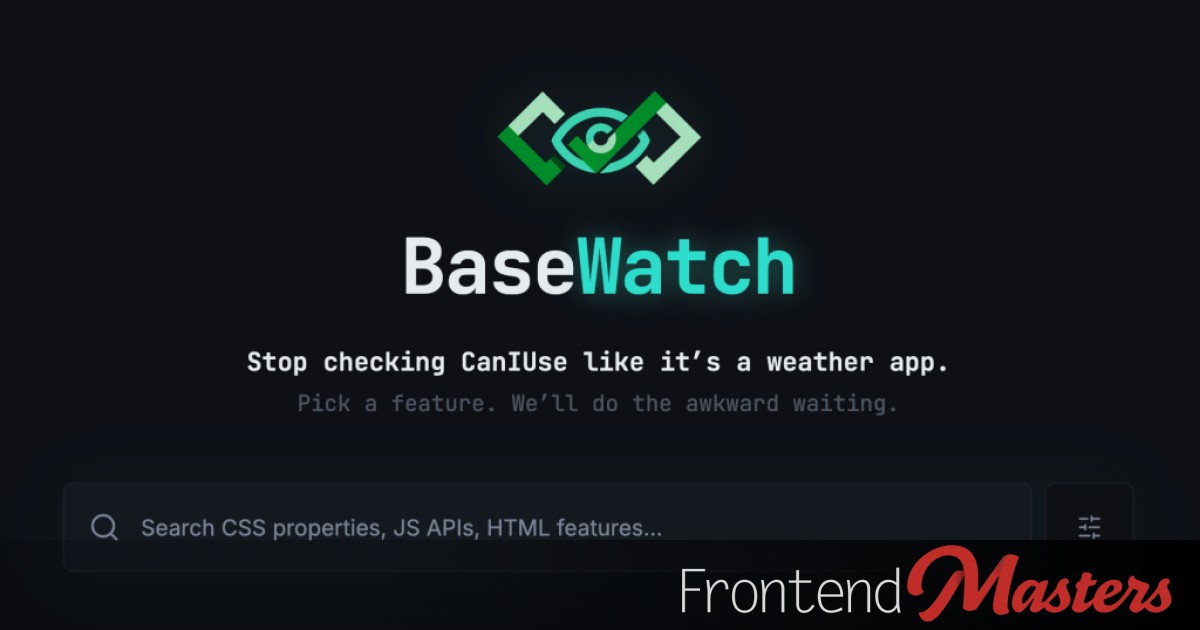
There is so much new web technology happening all the time, it is definitely not your fault if you feel like you can’t keep up with it. Big thumbs up to the new service BaseWatch, which will let you know when web technologies you care about become widely available, and thus potentially close enough to […]

Flexbox has a very specific algorithm for determining how to deal with remaining (or lack of) space in a row. Let's use actual math to understand it then apply it to a masonry layout.

Node.js is the default, but should it be? Bun and Deno have come a long way in compatibility and there are reasons that can make them better choices depending on the project.