

Your manifest can now support multiple languages.

Chrome extension developers can now opt-in to use the Structured Clone algorithm for message serialization.
Take a last chance to try out the Soft Navigations API before release with this final origin trial.
Join the origin trial for Connection Allowlists, a security mechanism in Chrome that creates a network sandbox for documents and web workers.

Learn how Chrome Autofill is improving support for Japanese phonetic names (Furigana), making it easier for users to fill out web forms.
Over the next several weeks, we'll release lessons on AI evals.
We're launching a new appeals process in the Chrome Web Store.
Get a preview of the next Chrome release with this post detailing the features in the current beta.
Automatic context switching for AI assistance, Updates for DevTools for agents, and code completion for Console and Sources panels.
Element-scoped view transitions, CSS contrast-color(), and the border-shape property.
The next iteration of view transitions is here!
Chrome automatically opens a video PiP window for sites that have not registered a media session action handler.

Get a preview of the next Chrome release with this post detailing the features in the current beta.

Learn the different purposes of WebMCP and MCP, and how to use them together for agentic experiences.
Adopted Style Sheets, Console history, and DevTools MCP with --slim mode, memory snapshots, and new A11y/LCP skills.
Scroll-triggered animations, Scoped custom element registries, Sanitizer API, and more.
You can now encapsulate custom elements.
Try out focusgroup and comment on the proposal.

Device Bound Session Credentials (DBSC) are now available in Chrome 145 on Windows to help protect users from cookie theft.
From September 2026 Chrome releases will be every two weeks.
Support WebGPU compatibility mode on OpenGL ES 3.1 and transient attachments.
We're launching a new enterprise publishing option in Chrome Web Store.
Learn about the complexity of implementing the corner-shape feature.
Short description
Column wrapping for multicol, Device Bound Session Credentials, and more.

WebMCP aims to provide a standard way for exposing structured tools, ensuring AI agents can perform actions on your side with increased speed, reliability, and precision.
Learn how the Chrome Tooling team optimized token usage for AI assistance, and discover techniques for more efficient data usage with LLMs.
WGSL subgroup_uniformity extension and experimental synchronous buffer mapping in workers.
Learn about the new prerender until script option for the Speculation Rules API, now available in origin trial.
Changes to the update process for installable web apps.
You can now wrap columns into new rows in CSS multi-column layout.
Get a preview of the next Chrome release with this post detailing the features in the current beta.
新しい<geolocation> HTML要素がChrome 144から利用可能になり、ユーザーの位置情報データのリクエスト方法が大きく変わります。この要素は、スクリプトによる許可プロンプトから脱却し、宣言的でユーザーアクションに基づく体験を提供します。これにより、許可状態やエラーを処理するためのボイラープレートコードが削減され、ユーザーの意図をより強く示すことができ、ブラウザの介入を回避するのに役立ちます。この要素は、ウェブ標準コミュニティとの厳密な議論と実世界でのテストの結果として登場しました。最初は一般的な<permission>要素として提案され、特定の機能に特化した要素へと進化しました。<geolocation>要素は、ユーザーの信頼と意思決定を改善するための専用ボタンを使用することで、成功率を向上させることが確認されました。今後は、カメラやマイク用の専用<usermedia>要素も開発される予定です。 • 新しい<geolocation>要素は、ユーザーの位置情報データのリクエスト方法を改善する。 • スクリプトによる許可プロンプトから、ユーザーアクションに基づく体験に移行する。 • 許可状態やエラー処理のためのボイラープレートコードが削減される。 • ユーザーの意図を強く示し、ブラウザの介入を回避する。 • 一般的な<permission>要素から特定の機能に特化した要素へと進化した。 • ユーザーの信頼と意思決定を改善するための専用ボタンの使用が成功率を向上させた。 • 今後、カメラやマイク用の専用<usermedia>要素も開発される予定。
Chrome 143 introduces key updates to the FedCM API for better privacy and developer experience. Developers should note that some changes are not backward-compatible.
WGSL subgroup_id and uniform_buffer_standard_layout extensions and WebGPU rolling out on Linux.
Chrome DevTools MCP server, individual request throttling, adopted stylesheets and 2025 highlights.
New rate limits for sites that send a lot of notifications with little engagement.
Use the Request conditions tab to block specific URLs or apply custom network throttling profiles to individual resources.
We have scroll-driven animations. Now, meet scroll-triggered animations.
We shipped a new feature to the Chrome DevTools MCP server that is going to make it a lot easier for your coding agent to debug your current browser sessions.
Learn how the Signal API for passkeys is now available on Chrome for Android, enabling better synchronization between relying parties and passkey providers.
Sculpt dynamic interfaces, stretch your imagination, and play with these 22 powerful new CSS features that landed in Chrome this year.
Discover the winning apps and extensions from the Built-in AI Challenge, where we invited you to reimagine what's possible with Gemini Nano in Chrome.
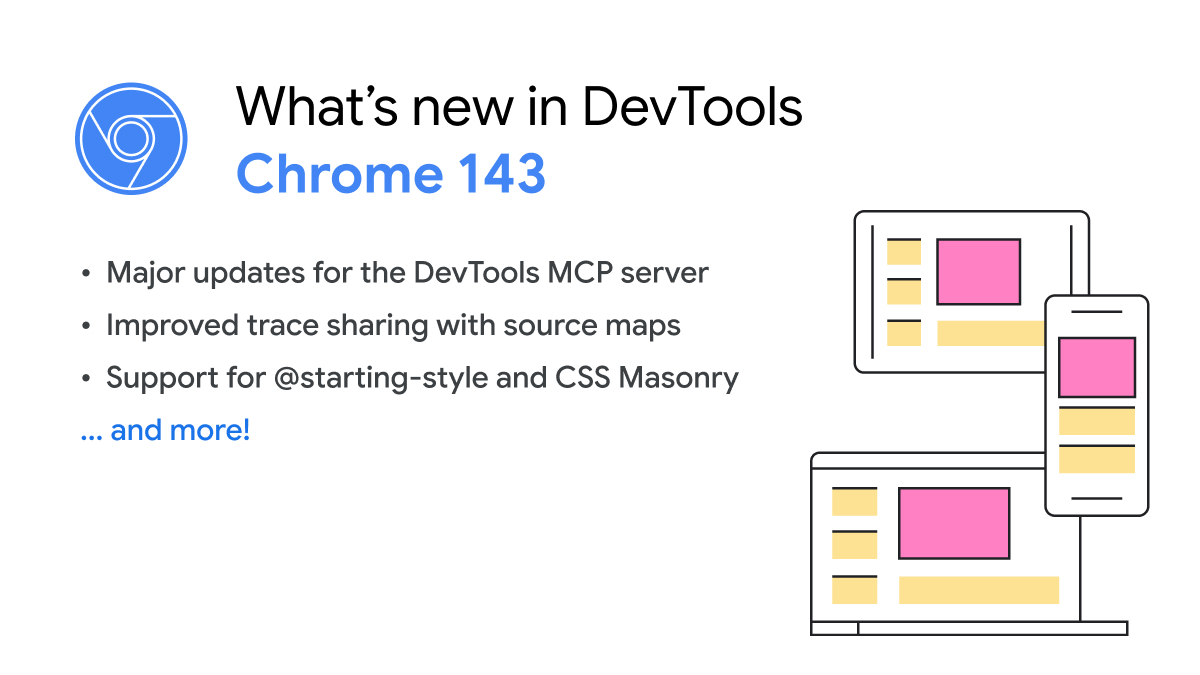
Chrome DevTools MCP server v0.11.0, improved trace sharing, @starting-style support, masonry editor, and Lighthouse 13.
Learn about the latest features shipping in Chrome.
CSS anchored fallback container queries, side-relative positioning for background position longhands, and more.
Chrome 143 starts an origin trial for the Digital Credentials API for issuance. This new API makes it easier for websites to provision digital credentials to the user's preferred wallet
Texture component swizzle, and remove bgra8unorm read-only storage texture usage.
Two-step location permissions in Chrome on Windows for enhanced user privacy and control.
Test new Content Security Policy (CSP) features in origin trial.
We're launching publisher pages in the Chrome Web Store.
From Chrome 142, the FedCM dialog can display the iframe's domain when the RP is embedded as a third-party iframe.
Discover the features that are coming to Chrome in the latest beta release.
Detect fallback positions with anchored container queries from Chrome 143
Harsh shares their journey participating in Google Summer of Code.
The :target-before and :target-after pseudo-classes, range syntax for container queries, and more.
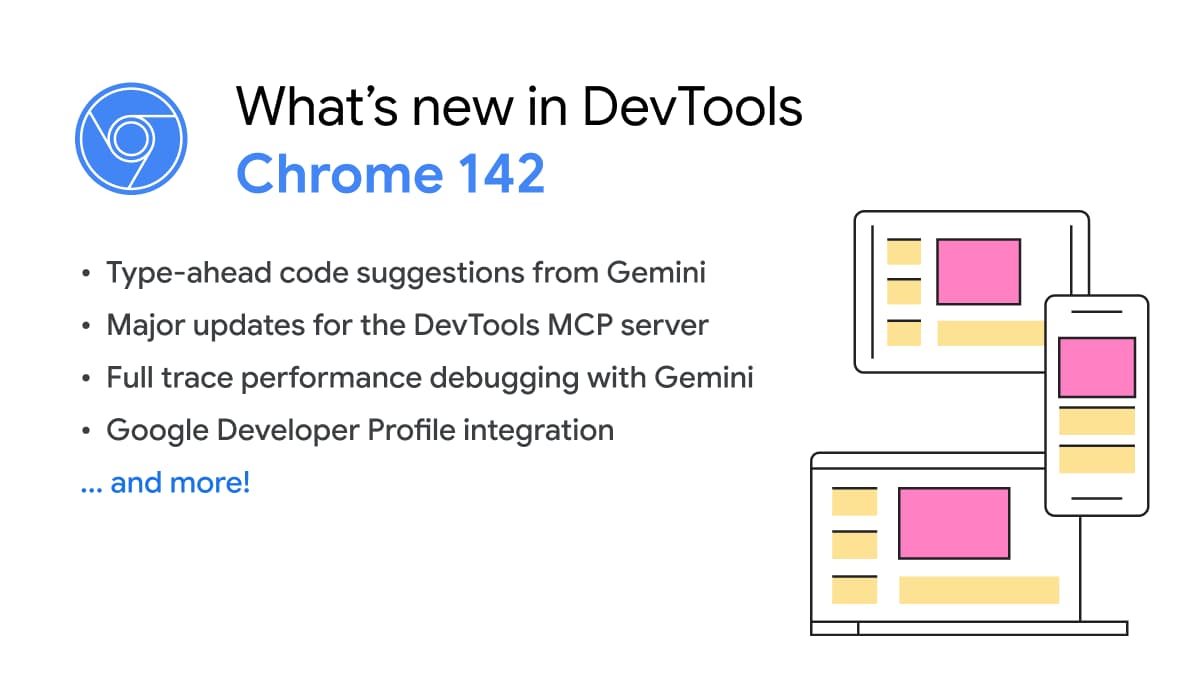
Code suggestions in Console and Sources, full performance trace debugging with Gemini, toggle drawer orientation, DevTools MCP server updates, and more.

The second Device Bound Session Credentials (DBSC) origin trial starts in Chrome 142 with new updates to prevent cookie theft.
Chrome DevTools removes live editing in Chrome 145 (Feb 2026) due to low use and modern alternatives like Hot Module Replacement (HMR).
We're launching a new version of the Chrome Web Store API.
In partnership with a group of startups in NYC, we demonstrated how client-side AI and built-in AI APIs can be directly integrated into their products for greater speed, privacy, and a better user experience.
Lighthouse 13 is here with the move to Insights audits
Chrome for Android can now automatically create passkeys after password sign-in, helping users transition to passkeys with less friction.
An overview of what changed for View Transitions in 2025
Join the free "The Future of identity on the web" webinar on November 4, 2025.
The Digital Credentials API, available from Chrome 141, enables websites to verify user information in a privacy-preserving way.
Discover the features that are coming to Chrome in the latest beta release.
We're expanding Gemini Nano's inference support to CPUs.
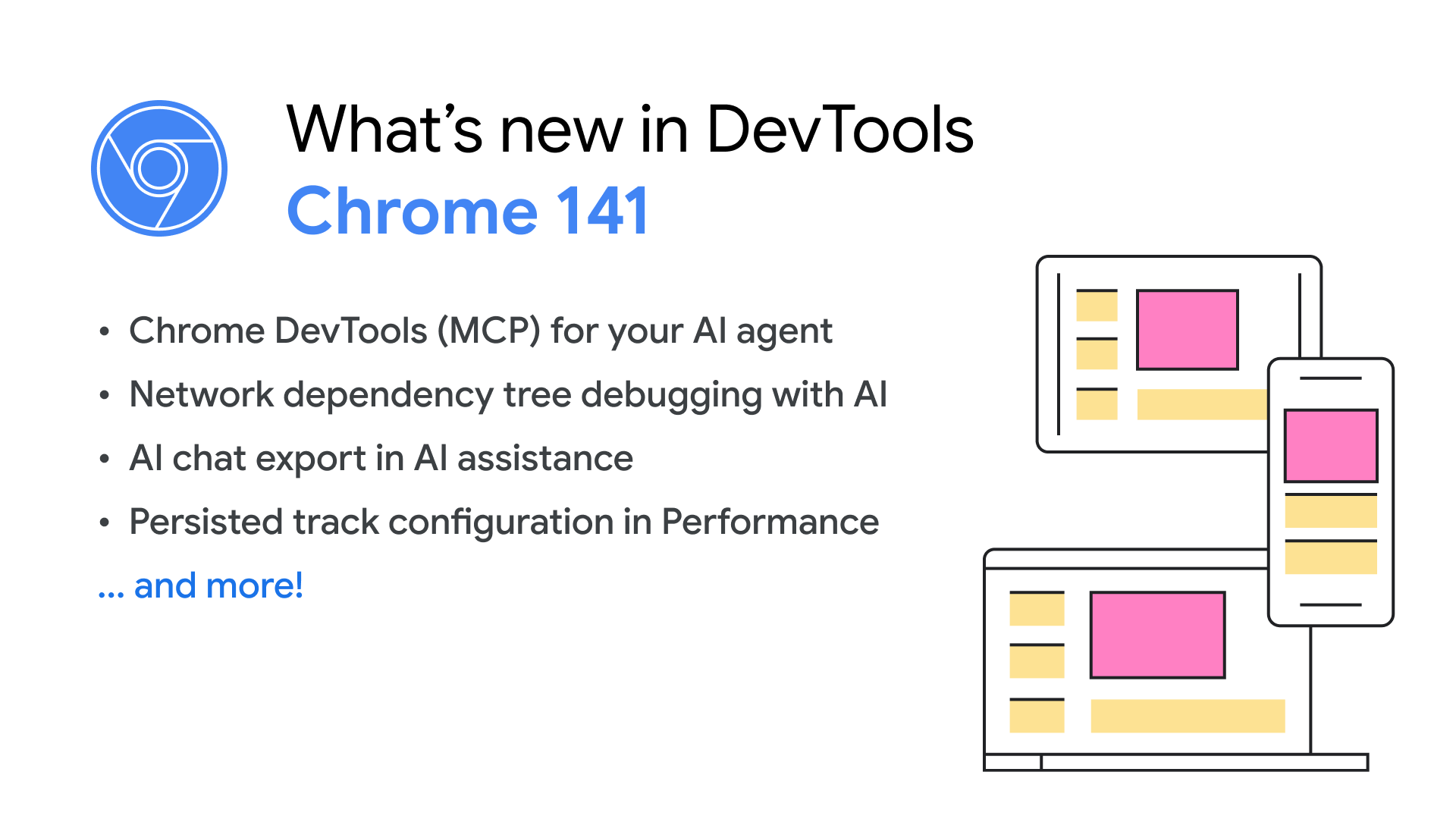
Chrome DevTools (MCP) for your AI agent, network dependency tree AI support, AI chat export, persisted track configuration in Performance, and more.
How the features in CSS Overflow 5 can help you create more accessible carousel patterns.
Tint IR completed, integer range analysis in WGSL compiler, and SPIR-V 1.4 update for Vulkan backend.
Give feedback on this new event in origin trial.
Public preview for the new Chrome DevTools MCP server, bringing the power of Chrome DevTools to AI coding assistants.
Chrome's Built-in AI APIs are now available on Chromebook Plus devices, enabling web developers to bring client-side AI features to more users.
Help us build the next iteration of View Transitions
We're planning on deprecating the CrUX Dashboard after the end of November 2025. CrUX Vis is a newer tool that visualizes historical CrUX data that has many advantages over the older CrUX Dashboard.
Build and submit new web applications or Chrome Extensions, using one or more built-in AI APIs for a chance to win.
There are so many built-in AI APIs, each with their own playground and some with even more demos. You can see all of these demos and try out client-side AI.
Discover the features that are coming to Chrome in the latest beta release.
The ToggleEvent source attribute, the font-variation-settings descriptor, and more.
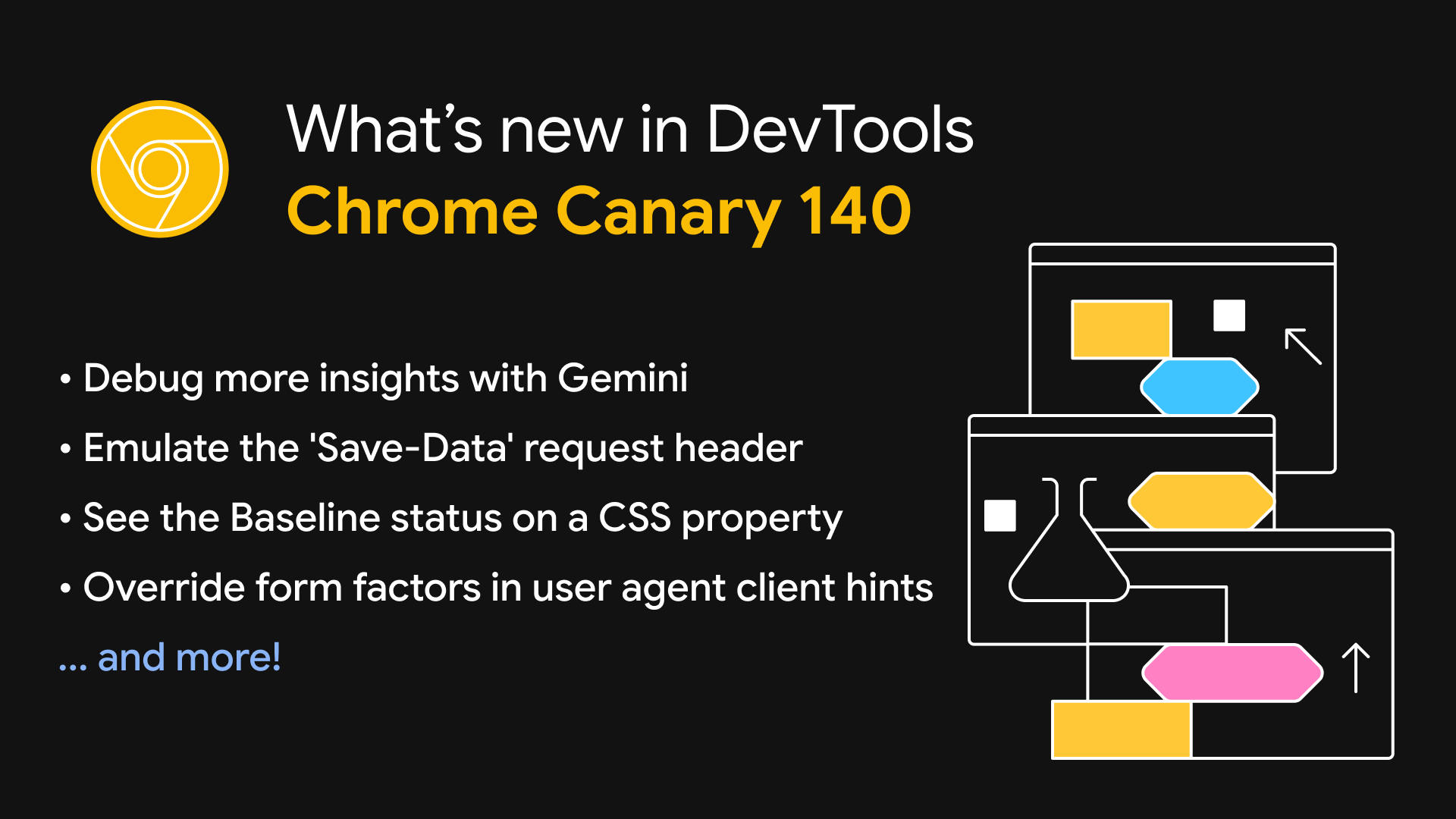
Debug more insights with Gemini, emulate the 'Save-Data' request header, see the Baseline status in a CSS property tooltip and more.
Device requests consume adapter, shorthand for using texture where texture view is used, and more.
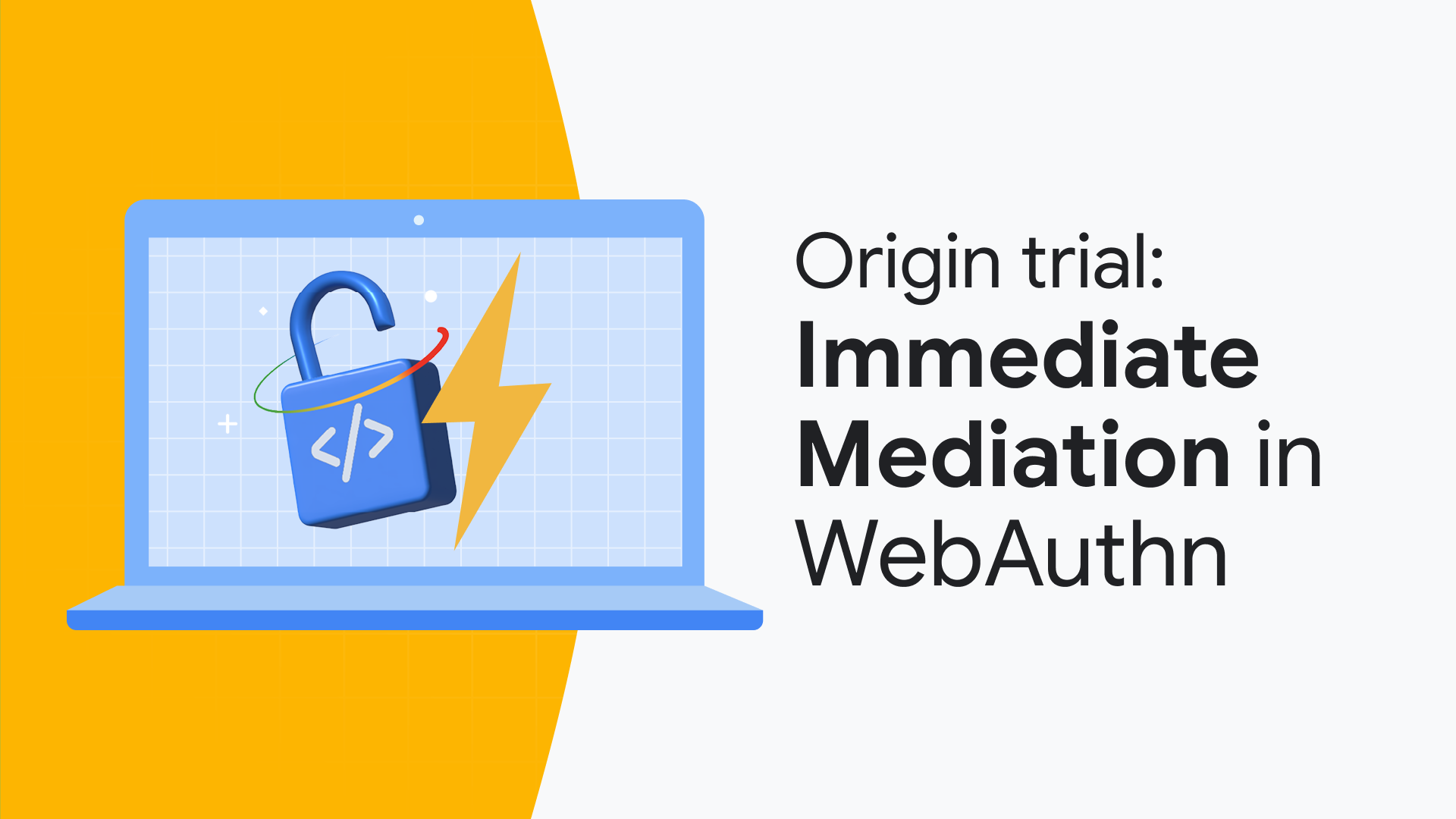
WebAuthn immediate mediation streamlines sign-in by instantly using available credentials and gracefully falling back when none are found.
From Chrome 138, Chromium-based browsers on Windows enable native UI Automation (UIA) support by default.
A recap of what we announced in the web UI space at I/O this year.
Discover the features that are coming to Chrome in the latest beta release.
Squircles and custom functions come to CSS, and on-device speech recognition to the Web Speech API.
Extended lifetime shared workers origin trial
New Soft Navigations origin trial launching to help measure Core Web Vitals for Single Page Applications (SPAs)
3D texture support for BC and ASTC compressed formats, new "core-features-and-limits" feature, origin trial for WebGPU compatibility mode, and more.
Help test the proposed masonry syntax in Chromium.
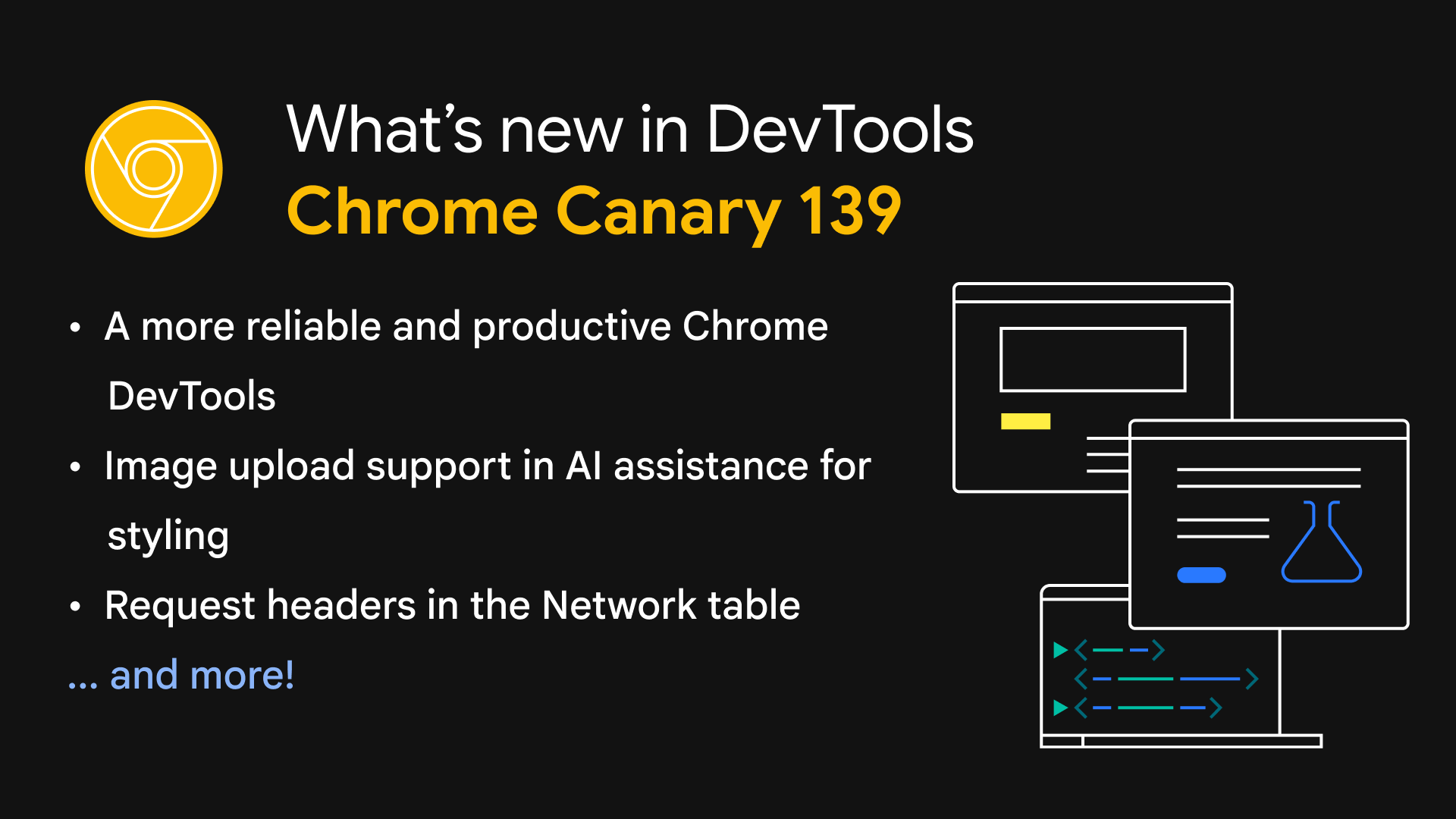
A more reliable and productive Chrome DevTools, support for arbitrary image upload in AI assistance for styling, and more.
Participate in the Prompt API origin trial to test multimodal inputs for Gemini Nano on your websites and web applications.
Learn about the new CSS if function, which enables a cleaner developer interface for dynamic styles like style queries and media queries.
Find out about the new features coming to Chrome with the latest beta.
Several new CSS functions, and built-in AI APIs for summarizing, translating, and detecting language.
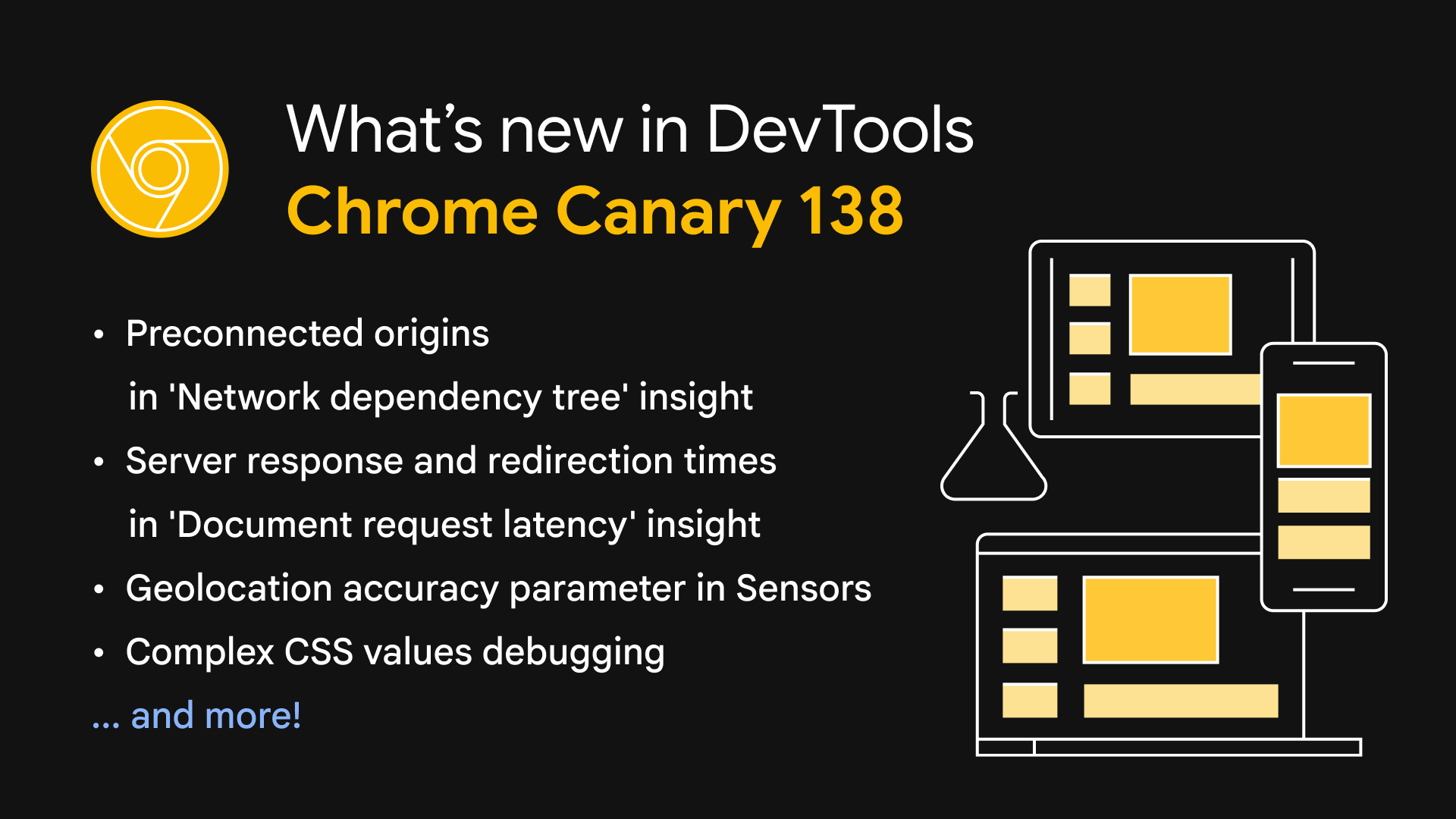
Discover preconnected origins or candidates and server response and redirection times in performance insights, emulate geolocation accuracy in Sensors, debug complex CSS variables, and more.
Shorthand for using GPUBuffer as a binding resource, size requirement changes for buffers mapped at creation, and more.
Learn about upcoming changes to bookmarks sync that impact extensions.
What you need to know about this change to how attributes are escaped.
Say goodbye to border and pseudo-element hacks.

Learn about the new permission prompt for sites that connect to local networks.
The Viewport Segments API has shipped with minor changes to the origin trial covered in this blog post.
An overview of the recent changes in Chrome Extensions, plus exciting upcoming extensions features developers can look forward to.
We are making a series of changes to the chrome.userScripts API.
Discover what's coming to Chrome with the latest beta.
CSS reading-flow and reading-order, the if() function, JavaScript Promise Integration with WebAssembly and plenty more.
Use texture view for externalTexture binding, buffers copy without specifying offsets and size, WGSL workgroupUniformLoad using pointer to atomic, and more.
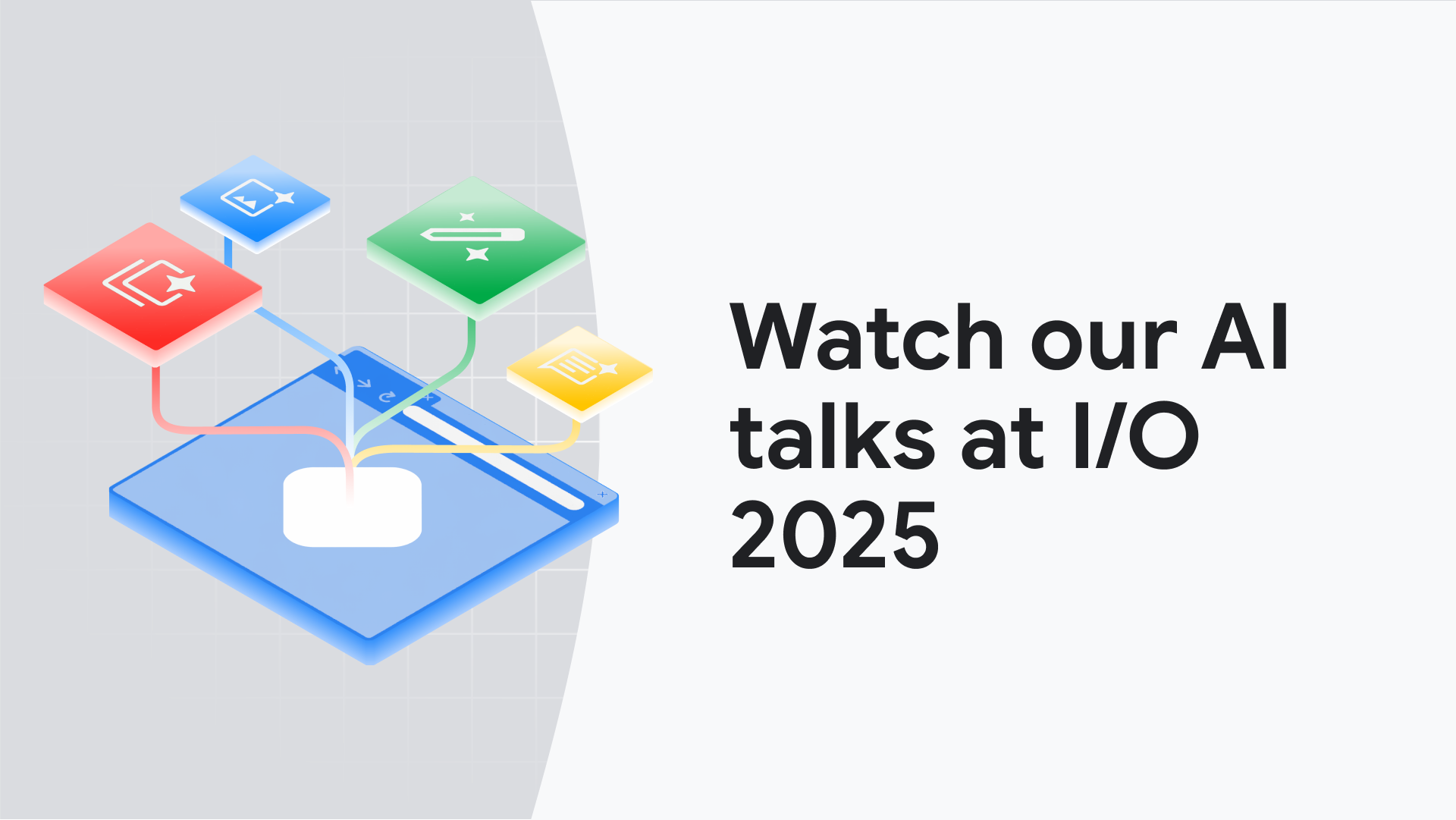
At Google I/O 2025, we shared what we've been working on, the future of AI on the web, and demonstrated how our partners are making use of client-side AI.